If you’ve never encountered a smoke curtain before, the concept is straightforward: it’s a curtain — typically a specialized fabric or film — that deploys to limit the passage of smoke during a fire event. The building code recognizes smoke curtains as an effective means of smoke and draft control, and they show up in a variety of applications across commercial construction.
At the broadest level, smoke curtains can function as smoke barriers or draft barriers, depending on the application. Some are general-purpose. Others — specifically those used in code-required applications like elevator openings — have to meet a higher bar. Those curtains must pass UL 1784, the air leakage test under elevated temperature, which certifies them as smoke- and draft-rated assemblies.
The most common application people encounter — and the one that generates the most questions — is the elevator smoke curtain. That’s what we’re going to focus on here.
What Is an Elevator Smoke Curtain?
An elevator smoke curtain mounts in a housing above the elevator door opening, stays out of the way until it’s needed, and drops into position when it’s triggered. The trigger is typically the local smoke detector. When the detector activates, it sends a signal to the curtain, which deploys down to the bottom of the elevator opening and stays there until the alarm is cleared or power is restored. These curtains also deploy on local power failure — unless the system includes a battery backup.
Why Elevator Shafts Are a Problem
Elevator shafts run the full height of a building. Without protection at each floor, they function as a direct conduit for smoke to travel from floor to floor — fast. The whole point of an elevator smoke curtain is to stop that from happening.
Here’s what most people don’t fully appreciate: in a building fire, smoke is the number one killer. Not the flames. Smoke.
The MGM Grand Fire Changed Everything
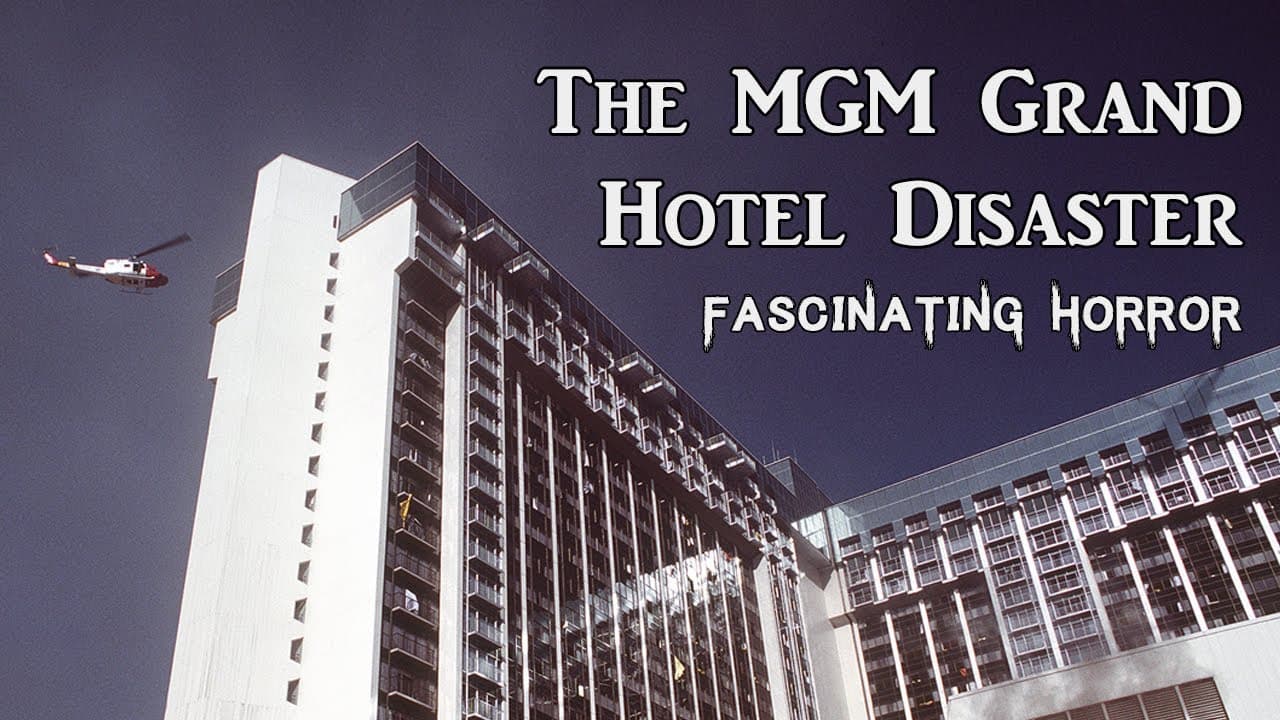
If you want to understand why elevator smoke protection matters, look up the MGM Grand Hotel fire in Las Vegas — November 1980. The fire started in a restaurant area of the casino, not in the hotel tower. But smoke moved through the casino, hit the vertical shafts, and migrated up through the building. The majority of the people who died that day were on the upper floors, far from where the fire started. Smoke killed them.
There’s footage of that fire on YouTube that puts it in stark perspective. It became a major catalyst for building code changes in the US, particularly around elevator smoke protection.
What the Code Actually Says
Elevator smoke protection is addressed in Chapter 30 of the International Building Code — specifically Section 3006.2, which covers when it’s required, and Section 3006.3, which covers how it must be provided.
The trigger that catches people off guard is 3006.2.1: elevator smoke protection is required when the elevator opens onto a fire-rated corridor. Here’s the logic behind that.
Any door that opens onto a rated corridor is required to be a minimum 20-minute fire-rated door. It also has to pass UL 1784 — meaning it’s smoke- and draft-rated as well. An elevator door, by contrast, is 90-minute fire-rated but carries no smoke rating. So you have a rated corridor with smoke-rated doors everywhere — except at the elevator opening, which is the weak link.
A smoke curtain closes that gap. It adds the smoke rating to an elevator opening that already has the fire rating. That’s the logic, and once you understand it, the requirement makes complete sense.
The Bottom Line
An elevator smoke curtain is a passive but critical life safety component. It doesn’t put the fire out. It contains smoke where it starts and keeps it out of the vertical paths that connect every floor in the building — buying time for evacuation and giving emergency responders a better situation to work in.
If you’re an architect specifying a building with elevators, or a building owner trying to understand what you’re looking at on a set of drawings, this is one of those systems worth understanding before it shows up as a submittal on your desk.
Have questions about smoke curtain specification or application? Reach out directly at hello@thesmokecurtainguy.com.
This post started as a voice dictation — me talking through what I know after 20+ years in the field. It was edited and formatted with AI assistance. The knowledge and opinions are mine.
— John, The Smoke Curtain Guy