How Much Do Elevator Smoke Curtains Cost? 2025 Price Guide
Got off a call with a general contractor last week who asked, "How much does an elevator smoke curtain cost?"
The honest answer is "it depends"... but not as much as you think.
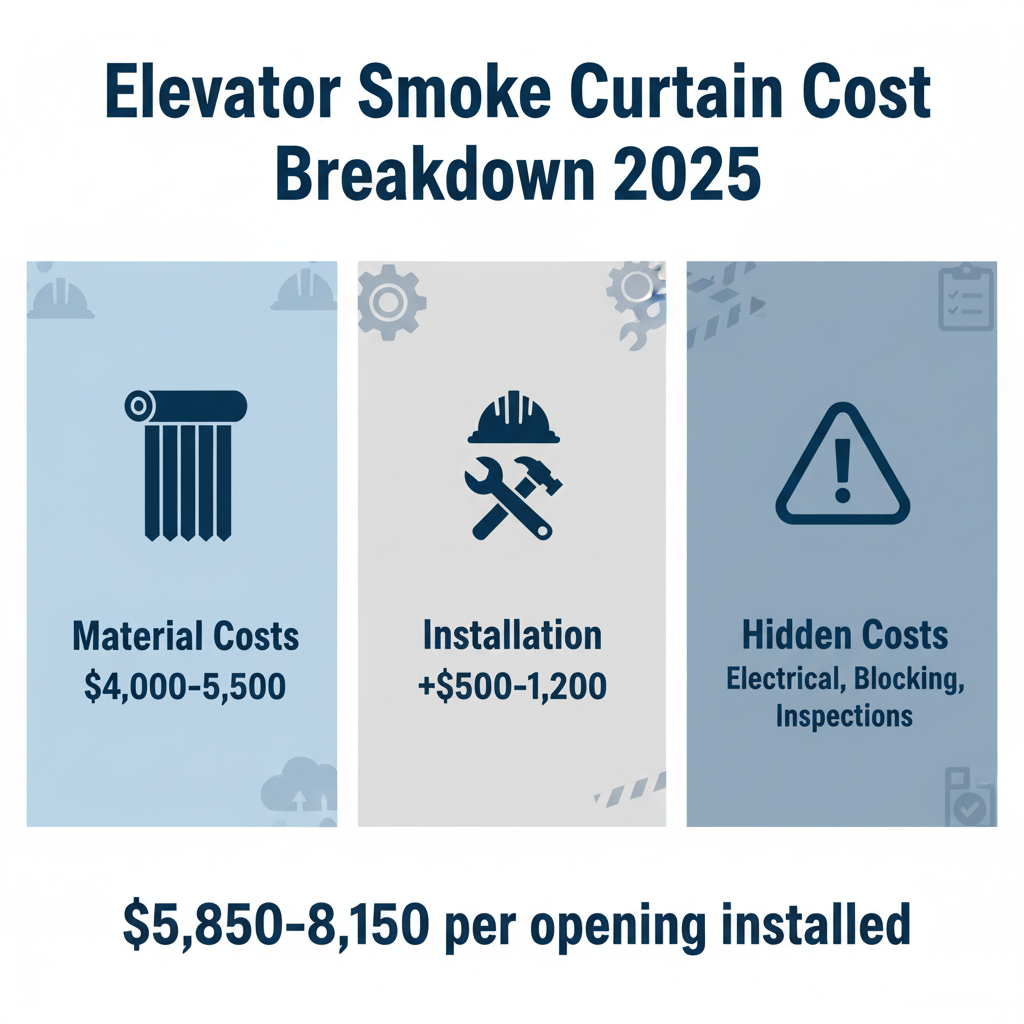
Most projects land between $5,850 to $8,150 per opening installed. Higher-end and larger systems or complex sites can reach $15,000 each.
If you've ever opened a smoke curtain quote and thought, "Where did that number come from?", this guide is for you.
Let's unpack the real factors that drive pricing so you can budget accurately, compare quotes fairly, and avoid the painful change orders that blow up your construction budget and schedule.
What Is an Elevator Smoke Curtain (and When Is It Required)?
Elevator smoke curtains are code-recognized barriers that deploy automatically to contain smoke at elevator openings. They're typically used as an alternative to enclosed elevator lobbies under IBC Section 3006.
Elevator Smoke Curtain Material Costs
Let's start with the curtain itself, before anyone steps on site.
Typical material-only ranges (per unit):
- Magnet-based curtain systems: $4,000 to $5,500
- Captured side guide systems: $3,500 to $5,500
- Self-contained units (motor in housing): $4,500 to $5,500
- Units with separate control panels: $4,000 to $5,000
What Affects Material Pricing
Curtain type: Magnet-based units cost more up front but install faster.
Control panel configuration: Shared panels reduce cost, if the AHJ allows.
Frame width: A 4" elevator frame instead of 2" can increase curtain size and price significantly.
Tariffs: Imported units face 10 to 15% tariffs depending on origin (UK, Germany, Middle East).
These are real, budget-level numbers drawn from recent bids across multiple project types, not marketing estimates.
Elevator Smoke Curtain Installation Costs
Material is only half the equation. Installation labor typically ranges $500 to $1,200 per curtain, depending on project size, logistics, and coordination.
Labor Cost Drivers
Project location: Local projects cost less; out-of-state installs add travel days and per diem.
Trade readiness: Waiting for drywall, elevator setup, or blocking can cause costly downtime.
Crew requirements: Larger or high-access curtains typically need two installers.
Site logistics: Hoist delays or limited material access increase labor time.
Local project budgeting example:
- Material: $4,000 to $5,500
- Install labor: $500 to $1,200
- Electrical/fire alarm: $750
- Drywall/blocking: $100 to $200
- Total budget: around $7,500 per curtain installed for well-coordinated local projects
Hidden Costs That Catch Many Projects
Electrical and Fire Alarm Coordination
Each curtain or set of curtains needs:
- A dedicated electrical circuit
- Fire alarm and local smoke detector activation input
- Disconnect switch
- Conduit and terminations
Budget approximately $750 per curtain.
Warning: Never share circuits with corridor lighting. This is one of the most common and expensive mistakes and can lead to damaged curtains.
Inspections and Testing
- State inspection: approximately $1,000
- Re-inspection (if failed): approximately $1,500
Budget for both. They're mandatory, and failed inspections can double your cost.
Blocking Oversights
Missing blocking before drywall goes up? Expect demo, patching, and repainting: $1,000 to $2,000 per opening.
Elevator Button/Lantern Relocation
If curtains are added late, relocating hall stations or indicators costs $500 to $1,000+ each, plus work by and coordination with the elevator contractor.
Lead Times, Rush Fees, and Schedule Risk
- Domestic: 4 to 6 weeks
- International: 10 to 12 weeks
- Rush orders: Up to 25% cost increase or $500 to $750 per unit
The Cost of Late Specification
Here's a real example: On a multifamily project, the architect forgot to specify elevator smoke protection. By the time someone noticed, they were one week from certificate of occupancy.
We had to rush-order international units with air freight, coordinate emergency electrical work, and pay premium rates for weekend installation. The curtains themselves cost $8,000 each, but with rush fees, emergency labor, expedited shipping, and re-inspection costs, the total hit $15,000 per opening.
The worst part? The delayed CO cost the owner nearly $3,000 per day in carrying costs while waiting for inspections to clear.
All of this could have been avoided if curtains were specified during design development, not during panic mode.
Ideal Install Timing
Install after:
- Elevator frames set
- Blocking and drywall complete
- Drywall mudded and sanded
- Before ceilings or soffits go in
This sequencing keeps installation clean, quick, and code-ready.
Regional Pricing Differences
Labor drives the delta:
- High-cost markets (NYC, SF, Boston): +20 to 40% labor, union rules, added insurance
- Standard markets (Charlotte, Atlanta, Phoenix): Within the guide's base ranges
Same curtain, different cost environment.
Elevator Smoke Curtain vs. Lobby vs. Pressurization: Cost Snapshot
Smoke Curtains:
Enclosed Lobbies:
Shaft Pressurization:
Material + Install (per opening): $5,850 to $8,150
Material + Install (per lobby): $7,500 to $15,000+ (does not include LOST revenue to owner)
Material + Install (per shaft): $50,000 to $100,000 (or more)
Lead Time: 4 to 12 weeks
Lead Time: 4 to 16 weeks (depending on finishes and door types)
Lead Time: 16 to 24 weeks
Floor Space Impact: None
Floor Space Impact: Significant
Floor Space Impact: None
Inspection Risk: Low
Inspection Risk: Low
Inspection Risk: High
Commissioning Complexity: Low
Commissioning Complexity: Low
Commissioning Complexity: Very High
Annual Maintenance: $50 to $100/unit
Annual Maintenance: Hardware wear and tear (approximately $1500 per door when required)
Annual Maintenance: Highest (system testing - done either after hours or taking all elevators off-line)
Total Cost of Ownership: Lowest
Total Cost of Ownership: Medium to High (when lost revenue is factored in)
Total Cost of Ownership: Highest
(Full comparison available at the Lobby vs. Curtain Calculator on the site.)
Bid and Scope Checklist
When requesting quotes, include:
- Elevator frame width
- Opening dimensions
- UL 1784 requirement
- Control panel configuration
- Number of site visits
- Electrical/fire alarm scope
- Inspection fees
- Lead times and rush options
- Blocking/backing details
- AHJ-specific requirements
Pro tip: Ask for each of these as separate line items. It makes comparing quotes much easier.
Common Budget Mistakes
The "$3,000 Fabric" Assumption
Treating curtains like simple fabric leads to massive under-budgeting. These are life-safety devices with motors, controls, and UL-rated testing.
Using Old Numbers
Tariffs, labor, and supply shifts make 2023 to 2024 prices obsolete. Always get current bids.
Miscounting Required Openings
Missing required curtains (or over-specifying them) happens constantly. Understand IBC 3006 triggers and confirm before bidding.
Overlooking Pressurization Risk
On larger projects, elevator shaft pressurization often seems cheaper but rarely commissions smoothly. Even short CO delays can cost more than the curtains themselves.
Smart Ways to Manage Costs
Design Moves
- Cover elevator banks with one larger curtain where allowed
- Consider a rated swing door for single elevators in low-traffic areas
Early Collaboration
Bring a curtain provider into design development:
- Accurate budgeting
- Trade coordination
- Blocking locations planned early
- Reduced change orders
Competitive Bidding Done Right
- Get clear, identical specs to all bidders
- Compare quotes line by line
- Select provider
- Collaborate on value engineering after selection
Elevator Smoke Curtain Maintenance and Ownership
Per NFPA 80, curtains require annual testing and maintenance.
Typical annual cost:
- Service call minimum: approximately $1,000/day
- Per-unit testing: approximately $50 to $100
For 8 curtains: approximately $1,500 to $2,000 per year
Alternatives comparison:
- Lobby doors: frequent hardware repairs
- Pressurization: costly annual testing and reliability issues
Over time, smoke curtains usually have the lowest total ownership cost.
Real-World Project Example
8-story multifamily, 2 elevators, 2 openings/floor (16 curtains):
- Material: $64K to $88K
- Install: $8K to $19K
- Electrical/FA: $12K
- Drywall/blocking: $1.6K to $3.2K
- Testing/inspection: $8K
- Total: $93K to $130K ($5,850 to $8,150 per curtain)
Compare to lobbies:
- $448K to $920K construction cost
- +$110K/year lost floor space revenue
Elevator Smoke Curtain FAQs
Do I need a control panel per curtain?
Not always. Some AHJs allow shared panels on a floor, others don't. Confirm early.
How long does installation take?
1 to 3 hours per unit once the site is ready.
Who provides electrical and fire alarm integration?
Usually the Electrical Contractor and Fire Alarm subcontractor; coordination is critical.
What causes failed inspections?
Shared circuits, missing UL 1784 labeling, incomplete blocking, or untested FA inputs.
How often should curtains be tested?
Annually, per NFPA 80 and manufacturer requirements.
Are curtains allowed instead of lobbies?
Yes, if compliant with IBC 3006.2 and UL 1784.
Key Terms
UL 1784: Smoke leakage rating required for elevator curtain assemblies.
AHJ: Authority Having Jurisdiction, local code official interpreting compliance.
Captured side guide: Curtain edge held in tracks for tight seal.
Magnet-based system: Uses magnets to hold fabric retracted until smoke detection.
Self-contained unit: Motor and controls housed in one compact assembly.
Next Steps
If you're in early design:
- Run the Lobby vs. Smoke Curtain Calculator
- Request preliminary pricing
- Add numbers to your budget
If you're in construction documents:
- Check specs against this guide
- Confirm frame widths and blocking details
- Coordinate with electrical/fire alarm trades
If you're under construction:
- Order now if not done (4 to 12 week lead)
- Confirm blocking, schedule install, plan inspection
Need help reviewing a project or spec? Use the Ask Me Anything form or email me at hello@thesmokecurtainguy.com. I'm happy to look at drawings, flag gotchas, and help you avoid the budget pitfalls that keep showing up on job sites.